
02Computational design & fabrication
University of Toronto · Master’s thesis
From Python patterns to robot toolpaths.
My thesis connected Python pattern generation, Rhino and Grasshopper geometry processing, and a UR-10e robot. I developed the pipeline and tested toolpaths against reach and collision limits before execution.
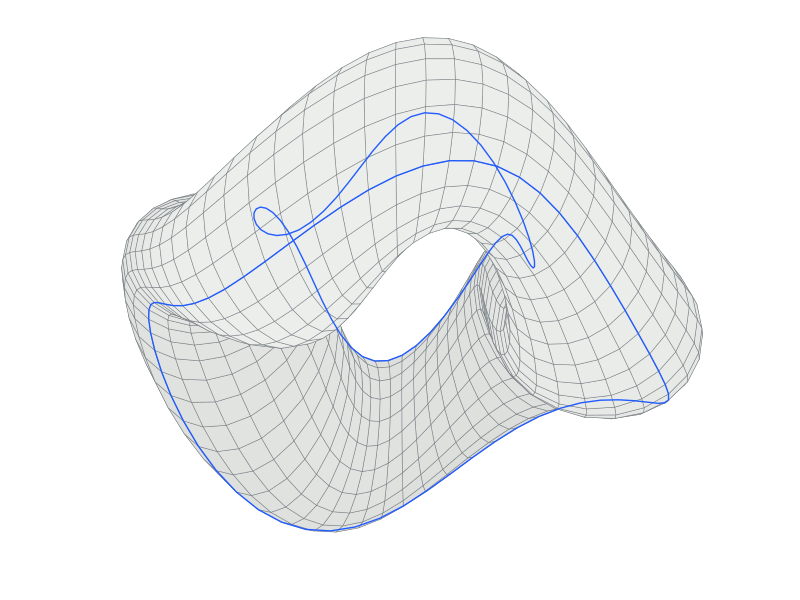 Illustrative
parametric study
Connect simple rules into a coherent structure.
Drag / arrow keys- custom line-based pattern generation
- Python
- Rhino & Grasshopper geometry processing
- CAD
- industrial cobot execution
- UR-10e
01Designing within robot limits
Material use, structural logic and efficient machine movement pull a design in different directions. A visually compelling pattern also has to respect the reach and collision limits of the robotic arm.
02Building the pipeline
- Developed custom, line-based pattern generation in Python.
- Automated geometry processing in Rhino and Grasshopper.
- Generated robot-ready toolpaths and executed them on a UR-10e industrial cobot.
- Tested outputs against reach and collision constraints while balancing material and movement efficiency.
03From geometry to movement
The workflow carried Python-generated patterns through CAD processing to executable robot movement. Geometry, material use and movement efficiency had to be considered together, so a change at one stage could be checked against the constraints of the next.
04Keeping constraints connected
Reach and collision limits need to inform the design as it develops. Connecting the stages makes the effect of a geometry change visible in the downstream toolpath.
The connected workflow
From one stage to the next.
01Generate patterns
Custom, line-based pattern generation in Python.
02Process geometry
Automated geometry processing in Rhino and Grasshopper.
03Check constraints
Test outputs against reach and collision constraints.
04Execute toolpaths
Generate robot-ready toolpaths and execute them on a UR-10e industrial cobot.
The interactive model on this site is an illustrative parametric study. It is not an original thesis model, a machine simulation or a fabrication-ready toolpath.
NextSelected work